 TEB Critical Forum 2027
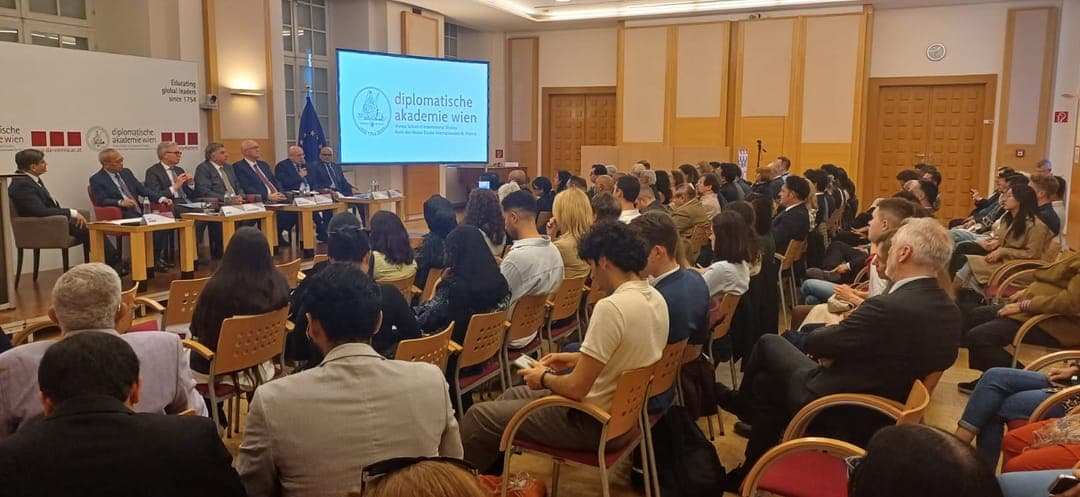
09:00 - 09:30 Coffee and Registeration
09:30 - 09:45 : Opening Remarks
The Energy Bridge (TEB)
The Role of TEB as a System Integrator Connecting Policy, Industry, Startups, and Research, and the Need to Strengthen the Focus on Critical Infrastructure and Raw Materials for Regional Energy Security
Speakers:
Rahul Mishra, Co-Founder, The Energy Bridge
, Co-Founder, The Energy Bridge
10:00 - 10:20 : Federal Chancellery of Austria - Cyber Security Platform (CSP)
Securing the Electrified Continent: How Austria Connects Government, Operators and Industry to Protect Critical Infrastructure
Speaker:
[Name to be confirmed], Federal Chancellery of Austria, CSP Secretariat
Alternative: Stephanie Jakoubi, Chair of the Cyber Security Platform (SBA Research), or Wolfgang Schwabl, Chair of the Cyber Security Platform (A1)
Focus:
As grids, data centres and industrial sites become more interconnected, protecting them is a shared responsibility across the public and private sectors. This keynote presents Austria’s cooperation model for cybersecurity: the Cyber Security Platform linking government with critical infrastructure operators, the Austrian Trust Circle for sector-specific incident information exchange, and CERT-Verbund Austria / GovCERT Austria within the EU CSIRTs Network. It shows how national structures, EU coordination (NIS Cooperation Group, ENISA) and the Austrian Programme for Critical Infrastructure Protection help utilities, data centre operators and industrial sites build trust, share threat intelligence and prepare for physical, cyber and hybrid threats.
10:20 - 10:40 : Federal Ministry for Economy, Energy and Tourism (BMWET) - Critical Raw Materials & Strategic Stockpiling
Securing the Electrified Continent: Europe’s Critical Raw Materials Agenda, From the Critical Raw Materials Act to a Common Stockpile
Speaker:
[To be confirmed], Elisabeth Zehetner, State Secretary for Energy, BMWET
Alternative: Senior official from the BMWET raw materials or industrial policy department
Focus:
Europe’s electrification depends on materials it does not yet control. This keynote presents Austria’s position on the EU’s Critical Raw Materials Act, the 2030 benchmarks for extraction, processing, recycling and supplier diversification, and the emerging plans for joint strategic stockpiles of materials such as tungsten, gallium, rare earths, magnesium, germanium and graphite. It shows how Austria’s industrial strategy and its alignment with ReSourceEU can reduce dependencies, protect competitiveness and strengthen resilience across the energy transition.
10:40 - 11:00 : Montanuniversität Leoben/GeoSphere - Critical Raw Materials Research
What Do We Actually Have? Austria’s Resource Base, Recycling Potential and the Road to the 2030 Benchmarks
Speaker:
[Name to be confirmed], Montanuniversität Leoben
Alternative: Representative of GeoSphere Austria (Geological Survey)
Focus:
Before Europe can stockpile or diversify, it needs to know what it has. This presentation maps Austria’s primary deposits and secondary raw material streams, assesses what recycling can realistically contribute to the Critical Raw Materials Act’s 2030 targets, and shows where research, processing capacity and stockpiling policy need to work together.
11:00 - 11:15: Networking Break
Click to edit this content...
11:15 - 11:30 : AIT Austrian Institute of Technology - TRENT (Technology Scenarios for the Energy Transition)
Which Technologies Will Electrify Europe, and What Will They Need? Strategic Technologies, Industrial Opportunities and Supply Chain Risks for Austria
Speaker:
[To be confirmed], Gustav Resch, AIT Austrian Institute of Technology
Alternative:
Thomas Kienberger, Head of the Chair of Energy Network Technology, Montanuniversität Leoben, member of the NEFI Network Steering Committee
Focus:
Electrification depends on technologies such as batteries, electrolysers, heat pumps and grid equipment, and each one depends on specific raw materials and supply chains. This presentation shows how TRENT builds technology scenarios for the energy transition, identifies the strategic technologies for Austria, and maps the industrial opportunities and supply chain vulnerabilities that come with them. It links the Critical Raw Materials Act benchmarks to concrete technology choices and gives the audience a practical way to see where dependencies are greatest and where Austrian industry can build a position.
11:30 - 12:30 : Session 1 - Critical Minerals for the Electrified Continent: From Dependency to Resilience
How Europe can secure supply, build processing capacity and use secondary raw materials before the 2030 benchmarks come due.
Panel Debate
As electrification accelerates, access to critical minerals is becoming the main bottleneck for Europe’s energy transition, and the focus shifts from setting targets to building real supply. The Critical Raw Materials Act sets binding 2030 benchmarks for extraction, processing, recycling and supplier diversification, while the EU is examining joint strategic stockpiles for materials such as tungsten, gallium, rare earths, magnesium, germanium and graphite.
This session explores how Europe and Austria can turn these ambitions into secure, competitive supply chains. Producers, processors, recyclers, researchers and policy voices will discuss where the real dependencies lie and how stockpiling, strategic projects, permitting, public funding and secondary raw materials can de-risk investment.
Key themes:
Mapping Europe’s critical mineral dependencies and what the CRMA benchmarks and stockpile plans change in practice
Building European mining and processing capacity: permitting, energy costs, financing and public acceptance
Scaling recycling and secondary raw materials to close part of the supply gap by 2030
Using EU and national instruments, strategic partnerships and industrial cooperation to de-risk projects and reach investment-grade scale
Moderator:
Guy Templeton, CEO, Krixos Critical Minerals; Board Director, StrategX Elements
Panelists:
12:15 - 13:10: Lunch
13:10 - 13:25: Vrije Universiteit Brussel (VUB), Centre for Security, Diplomacy and Strategy (CSDS) - Technology and Economic Statecraft Programme
Chips Diplomacy and the Energy Sector: The Semiconductor Dependencies Behind Europe’s Power System
Speaker:
Antonio Calcara, Head of the Technology and Economic Statecraft Programme, Centre for Security, Diplomacy and Strategy (CSDS), Vrije Universiteit Brussel (VUB)
Focus:
Europe’s energy transition runs on semiconductors. Power electronics, inverters, grid control systems, EV chargers and renewables all depend on chips designed and made in a handful of places, mostly outside Europe. This turns the geopolitics of semiconductors, from export controls to the EU Chips Act and US-China competition, into an energy-security question and not only a technology one. The talk examines how chip dependencies shape the security of Europe’s power system, what chips diplomacy means for the energy sector, and where the main vulnerabilities sit.
13:25 - 13:40 : International Energy Agency (IEA)
Electricity Security in a Digital, Decarbonising System: The New Dependencies
Speaker:
Alessandro Blasi, Special Advisor to the Executive Director, International Energy Agency (IEA)
Focus:
Digitalisation and the clean-energy transition are changing what it takes to keep the power system secure. This talk sets out the new dependencies a modern electricity system runs on, from digital control to supply chains, and what electricity security now requires of operators and governments.
13:40 - 13:55 : European Energy Information Sharing & Analysis Centre (EE-ISAC)
What Europe’s Energy Operators Are Seeing: Shared Threat Intelligence for the Grid
Speaker:
Aurelio Blanquet, Secretary General, European Energy Information Sharing & Analysis Centre (EE-ISAC)
Focus:
EE-ISAC is where Europe’s energy operators share what they see. This talk gives the sector’s own view of the cyber and cyber-physical threats now hitting power generation, grids and their control systems, drawn from real operator experience rather than general reporting. It looks at how the threat has moved toward the grid edge and operational technology (OT), where operators are most exposed, and why sharing intelligence across companies and borders has become part of keeping supply secure.
13:55 - 14:55 : Session 2 – Hybrid and cyber-physical threats to Europe's energy and digital infrastructure
Europe's energy and digital infrastructure is being attacked on purpose. The grids, cables and datacenters that carry the continent's power and data have become targets for states and theirproxies, who use them to apply pressure while staying below the threshold of open war, becausean attack on them is hard to attribute and slow to repair. The risk runs at two levels. At grid level,transmission operators and their cross-border interconnectors face system-level damage, where asingle strike spreads across synchronized systems and markets, while distribution operators face agrowing attack surface as flexibility services and remotely managed devices bring foreign suppliersinto the edge of the grid. At the connectivity level, subsea cables and the data centers they servecan become chokepoints, where one break affects several countries at once. The samedependence runs through the fuel cycle: several Central and Eastern European countries still relyalmost entirely on Russian fuel for their Soviet-design VVER reactors, and Russia supplies close to40% of the enriched uranium used in EU reactors. The session asks who is applying this pressureand how Europe should respond.
Moderator:
Gabriele Marchionna - Senior Research Fellow, GLOBSEC GeoTech Center
Panelists:
Andrea Chittaro, Chief Security and Cyber Officer, Snam
Gytis Kazokas (OF-5), Director, NATO Energy Security CoE
Maria Cristina Lobillo Borrero, Head of the Energy Platform Task Force, EuropeanCommission DG ENER
Roberto Panico, Head of EU Affairs, Terna
Francesco Sassi, Assistant Professor in Energy Geopolitics, University of Oslo
14:55 - 15:15 :: Networking Drinks
15:30 - 16:30 : Presentations to be announced
15:30 - 16:30 : Session 3 – Financing the Resilient Grid: Capital, Risk Sharing and Cross-Border Projects for Central and Eastern Europe
As electrification, data centres and the security of critical infrastructure raise investment needs, the bottleneck in Central and Eastern Europe is shifting from project ideas to bankable financing. Grids, storage, industrial sites, processing capacity for critical materials and digital infrastructure all need long-term capital, and much of it is cross-border.
This session explores how resilient infrastructure can be structured to attract that capital, using blended finance, EU and multilateral instruments, and public-private partnerships to share risk and reach investment-grade scale. Drawing on OECD, EU and development bank experience, speakers and panellists will discuss what makes projects bankable, where public money should lead, and how cross-border cooperation can turn national plans into financeable portfolios.
Key themes:
What makes resilient infrastructure bankable: revenue design, offtake and risk allocation
Using blended finance and EU and multilateral instruments to de-risk long-term investment
Mobilising private capital in Central and Eastern Europe
Making cross-border energy, transport and data projects financeable, with the security and critical-materials needs that come with them
Moderator:
Climate Policy Initiative CPI
Panelists:
ACER/ENTSO-E
Head of the European Investment Bank Group Office in Austria
(EIB)
ReSourceEU
Federal Ministry of Finance (BMF) Austria